Traditional Japanese scent
The Magic of Scent
Embraced by the nature of the earth
Softly touching the heart, body, and mind
富士山の麓 御殿場
日本古来の香りを誠実に伝え人々を笑顔に!
天然の香りは0.2秒で五感に響くと言われています。
自分内観に、人々の幸せに、子へ孫へ紡がれ
香りの魔法で世界中に祈りを込めて愛の香りを!
◆ 香室:心を整える和文化を軸に
ご自身で調合していただきます。
富士の湧き水を用いたお線香や練香、印香
気分や体調にあわせた各種匂い袋、防虫香
神仏に供えるお香、五行、二十四節氣、干支
清め、浄化、邪氣祓い、結界、無病息災
◆ 販売:御殿場市チャレンジショップ事業出店
(~2027年1月末まで)
御殿場市森の腰商店街エピスクエア2階
制作・販売・講座を実施中!
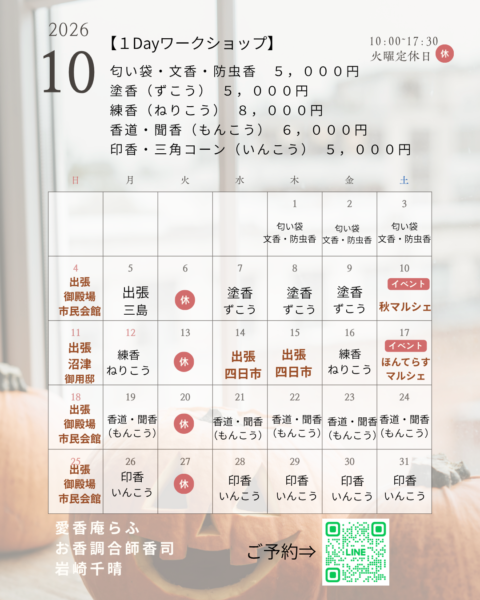
営業時間:10:00~18:00
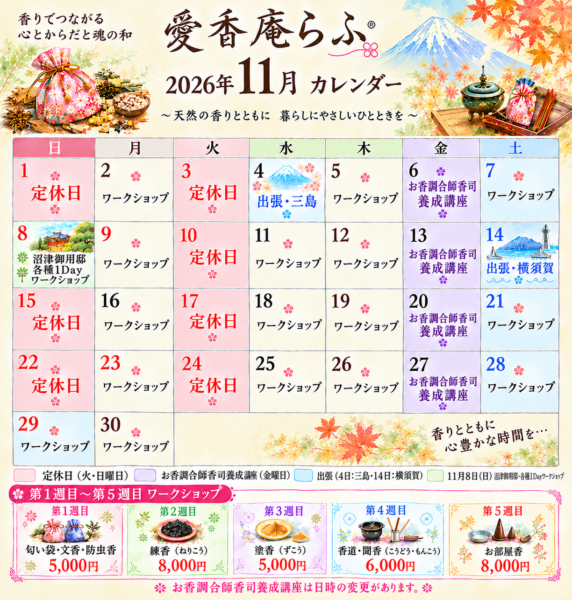
定休日:火・日
※日曜日は沼津御用邸にて定期講座
◆ 香道:日本伝道の所作・ふるまい
香木の香りを「聞く」「聞香」(もんこう)
非日常の「香木」を愉しんでいただけます。
◆ 資格:お香調合の専門科「香司」
「お香調合師香司」養成講座のご用意もございます。
30代~40代女性の方限定!
◆ 各種団体:学校、企業、施設、旅館、ホテル
空間ごとに「過ごす人の気持ち」を考え香りを調合し
それぞれに合った心地よい空間を
天然香原料を用いてお仕立ていたします。
◆ English-friendly incense-making experiences for international visitors.
Come join us!
◆ 対面/オンライン
Japanese incense blender Chiharu Iwasaki
お問い合わせ↓
香の特徴や効能を十にあらわしたもの。
十一世紀の北宋の詩人・黄庭堅の作とされ、
日本では一休宗純によって広められたとされる。
お香の素晴らしさを説いた詩文です。
―、感格鬼神(かんかくきじん):感は鬼神に格(いた)る感覚が研ぎ澄まされ、神の様に全集中する
二、清浄心身(しょうじょうしんじん):心と心身を清浄に清め浄化する
三、能除汚穢(のうじょおえ):よく汚穢を除く、けがれや汚れを取りのぞく
四、能覚睡眠(のうかくすいみん):眠気をさます、よく眠る
五、静中成友(せいちゅうじょうゆう):静中に友と成る、静けさの中に癒しと安らぎをもたらす
六、塵裏偸閑(じんりゆかん):塵裏に閑(ひま)をぬすむ、忙しい時も和ませる
七、多而不厭(たじふえん):多くしても厭(いと)わず、邪魔にならず
八、寡而為足(かにいそく):寡(すくな)くして足れりとす、少なくても十分香る
九、久蔵不杤(きゅうぞうふきゅう):久しく蔵(たくわ)えて朽ちず、年月を経ても朽ちず
十、常用無障(じょうようむしょう):常に用いて障りなし、常用しても、害なし
【香十徳】
中国の北宋の詩人(960~1127年)黄庭堅(こうていけん)が作った漢詩です。
お香の効果効能を説いた詩文
日本に広めた方が、『一休さん』一休和尚です。
The Ten Virtues of Incense
香十徳 — Kō Jittoku
Kō Jittoku is a traditional teaching that describes the ten virtues and qualities of incense.
It is attributed to Huang Tingjian (黄庭堅, 1045–1105), a renowned poet of the Northern Song dynasty in China. It is said to have been introduced and popularized in Japan by the Zen monk Ikkyū Sōjun (一休宗純), better known as Ikkyū-san.
The Ten Virtues of Incense is a beautiful poetic text expressing the profound qualities and benefits traditionally associated with enjoying incense.
1. 感格鬼神 — Kan Kaku Kishin
“To reach the spirits.”
Incense sharpens the senses and brings the mind into a deeply focused and heightened state of awareness, almost as if one were connecting with the divine.
2. 清浄心身 — Shōjō Shinjin
“To purify the mind and body.”
The fragrance cleanses and refreshes both the mind and body, bringing a sense of purity and renewal.
3. 能除汚穢 — Nōjo Oe
“To remove impurity.”
Incense is traditionally believed to dispel unpleasantness and cleanse what is considered impure or unclean.
4. 能覚睡眠 — Nōkaku Suimin
“To awaken from sleep.”
Its fragrance can refresh the mind, dispel drowsiness, and help awaken the senses.
5. 静中成友 — Seichū Jōyū
“To become a companion in stillness.”
In moments of quiet, incense becomes a gentle companion, bringing comfort, peace, and a sense of healing.
6. 塵裏偸閑 — Jinri Yukan
“To steal a moment of leisure amid the dust of daily life.”
Even in the midst of a busy life, the fragrance of incense creates a peaceful moment of calm and serenity.
7. 多而不厭 — Tajifuen
“To never become tiresome, even in abundance.”
Even when enjoyed frequently or in greater quantity, incense does not feel intrusive or burdensome.
8. 寡而為足 — Kanisōku
“A little is enough.”
Even a small amount of incense can fill the space with its beautiful fragrance.
9. 久蔵不朽 — Kyūzō Fukyū
“To endure through long storage without decay.”
Quality incense and fragrant materials can retain their beauty and character over many years when carefully preserved.
10. 常用無障 — Jōyō Mushō
“To be used regularly without hindrance.”
Incense may be enjoyed as a part of everyday life, bringing fragrance and tranquility without disturbing our daily activities.
The Beauty of the Ten Virtues of Incense
The Ten Virtues of Incense is not simply a description of fragrance.
It expresses the traditional Japanese appreciation of incense as something that can bring clarity to the senses, purity to the mind, tranquility to the heart, and a moment of peace to everyday life.
Through incense, we can pause, breathe, listen to the fragrance, and reconnect with ourselves.
This is one of the beautiful ways in which incense has been cherished throughout Japanese culture.